
Finding Onondaga County Residents
No official Onondaga County residents directory exists, and the county keeps no current-residence file. So the path depends on the question. A known street address belongs in a parcel or assessment search first. An old Syracuse household may surface in a city directory, census film, or newspaper archive instead. A name tied to a deed should be checked in both grantor and grantee roles, since the same person can appear on either side of a transfer. Court, vital, voter, business, and license systems each sit behind their own legal boundaries. Treat every match as a clue until the dates and roles line up.
Keep a log for each Onondaga County search. Note original and alternate spellings, the date range, the municipality, the source date, the record role, and whether an address is situs, mailing, service, or historical. Onondaga County spans Syracuse, 19 towns, 15 villages, and the Onondaga Indian Reservation. Mailing city, ZIP Code, parcel geography, and municipal boundary can all diverge on one property. That detail explains many apparent no-matches.
- Normalize the name or street address, including town or city and any known date.
- Check the local assessment record or County GIS parcel to identify the parcel and owner field.
- Use the County Clerk trail for recorded instruments, preserving grantor, grantee, and recording dates separately.
- For a historical household, compare a directory year with census, map, and obituary evidence.
- When a needed record is not online, ask the responsible office for an existing record through its counter, mail route, or FOIL process.
Onondaga County Jurisdiction Clues
One address in Onondaga County can wear many labels. A legal situs, a tax parcel, a school district, a fire district, a mailing city, a ZIP Code, and the county can all describe the same place differently. One 2025 Cicero assessment example uses a North Syracuse address and several special districts. The mailing city is not the municipality. Save every label. Keep each district name in the resident lookup. The City of Syracuse, its towns and villages, and the reservation each keep their own records offices and procedures, and the Onondaga County government organization page shows how those municipal layers fit together.
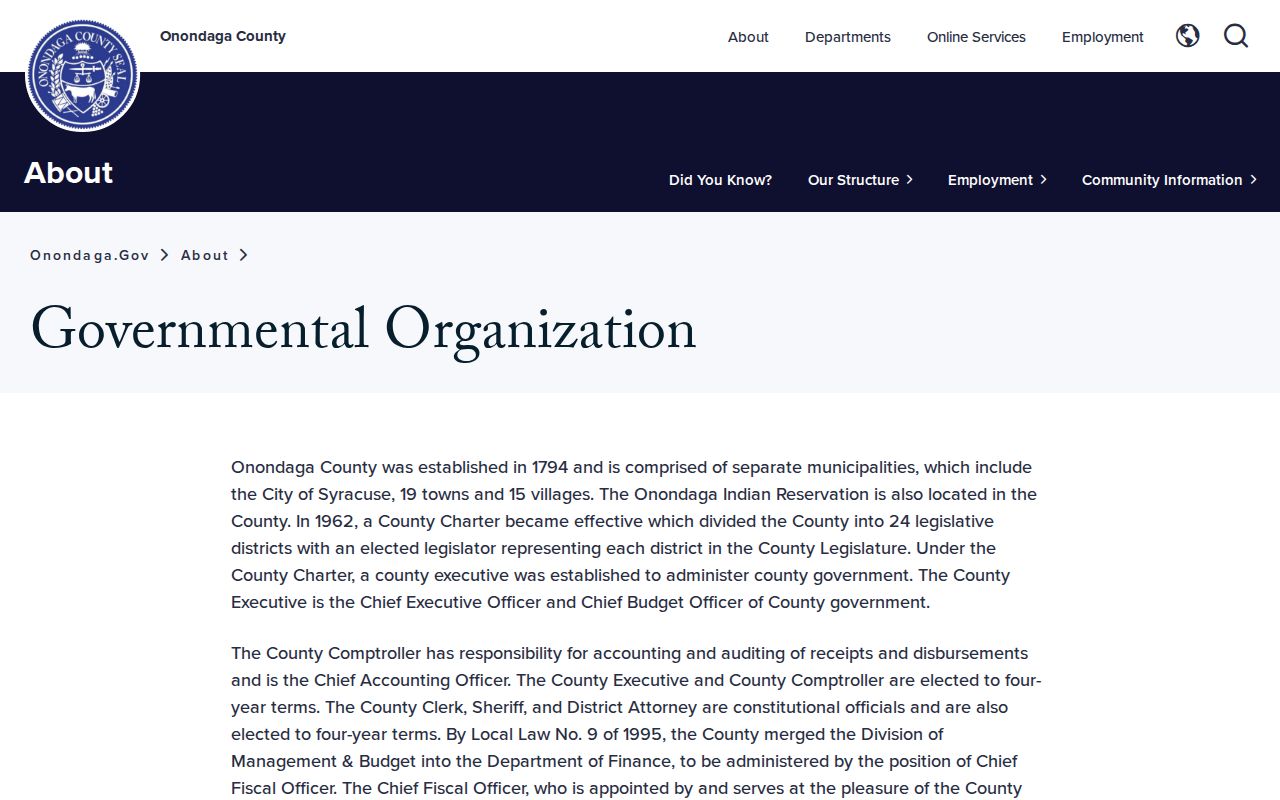
That map matters in a residents search. A county no-match often means the record lives elsewhere. Its true home may be Syracuse, a town or village office, a state agency, or a historical collection instead.
Onondaga County Resident Record Offices
Three public offices anchor the Onondaga County residents directory. The Clerk records land instruments and archives. Real Property Tax Services directs users to assessment data. Local town assessors remain the most current source during the assessment cycle. The Board of Elections steers voters toward the statewide status and poll-site lookup. No office keeps a general household roster. Every result still needs a date and a clear description of what the record actually captures.
Onondaga County Clerk
401 Montgomery Street, Room 200
Syracuse, NY 13202
315-435-2227
Real Property Tax Services
County assessment information
Town assessors maintain local rolls
Town assessor directory
The County Clerk access page connects deeds, courts, archives.
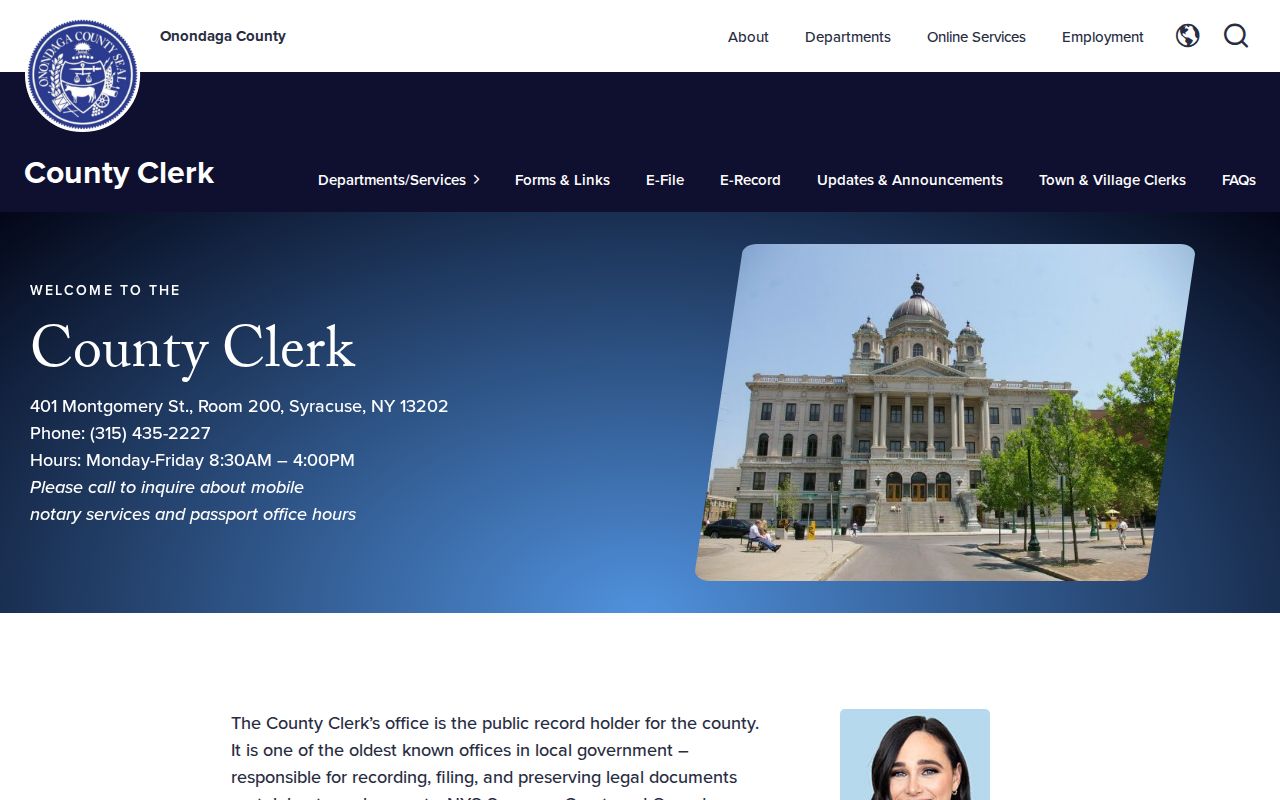
Real property, civil actions, criminal actions, and Photostat or archival requests each go to a different unit inside the Clerk's office. Naming the right unit up front keeps a county records request from wandering between desks.
Onondaga County Parcel Search Fields
Image Mate and the county GIS serve two different purposes. They both feed an Onondaga County residents directory search. Image Mate handles assessment and tax information. The GIS viewer brings in parcel geometry, map layers, measurement tools, and PDF map export. A parcel boundary on screen is not a legal survey. Likewise, the owner on an assessment roll may not be the person living at the property today. That name reflects a roll date, not current occupancy. Before drawing any property conclusion, weigh the roll date carefully. Check what the town assessor and the Clerk report.
| Onondaga search field | Use and caution |
|---|---|
| Owner or name | Available in Image Mate and the GIS viewer; add municipality for a common surname. |
| Street address | Use the number and street, then distinguish a property situs from a mailing address. |
| Parcel or account field | Preserve SBL punctuation and leading zeros; it is an identifier, not a street address. |
| GIS geometry or identify | Use map layers and the identify tool to orient a parcel, not to settle a boundary. |
The county property-tax information page directs readers to assessment sources and explains their limits.
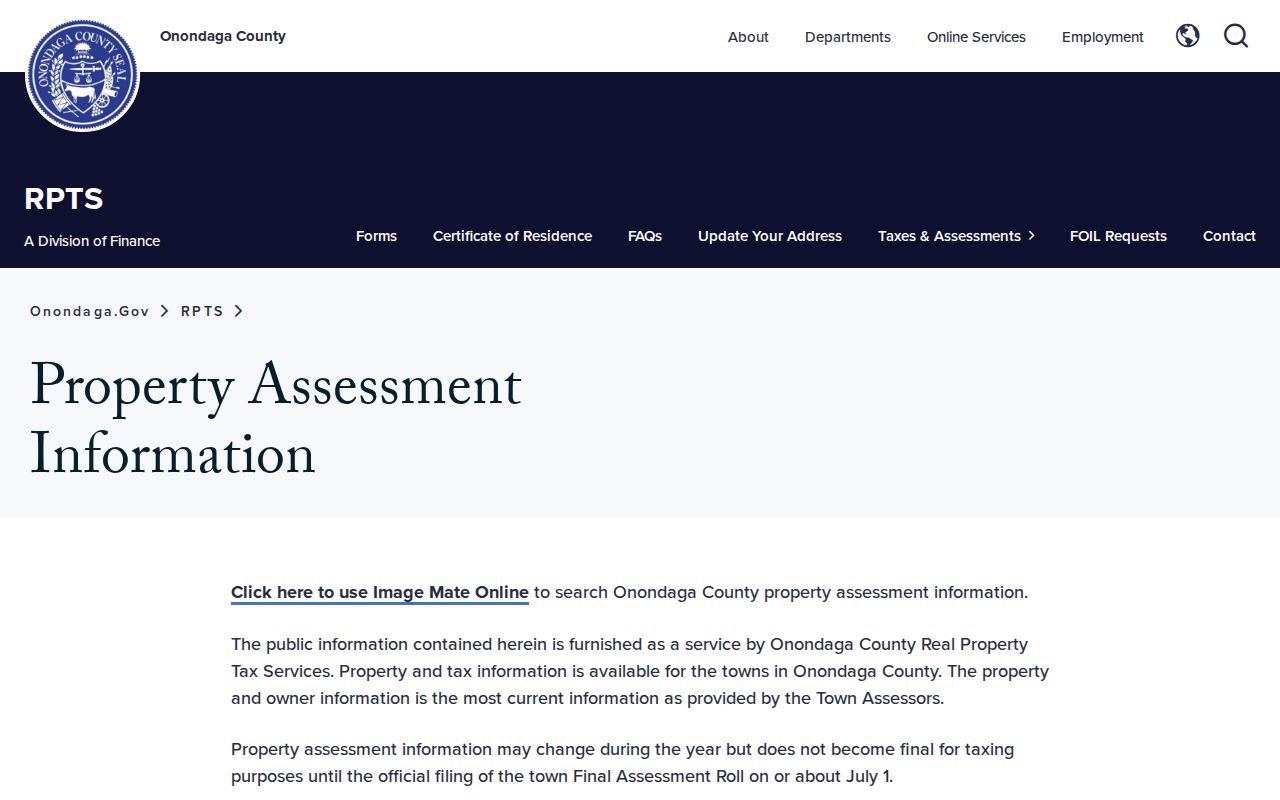
A 2025 Cicero roll sample illustrates the typical fields: SBL, owner, location, property class, assessment, exemptions, districts, parcel size, and deed book or page. Useful as they are, these describe a tax record. They are not a household census.
Reading Onondaga County Record Roles
Every name in a public file carries a role. A deed names grantors, grantees, mortgagees, witnesses, and notaries. A court caption sets parties apart from attorneys. A permit separates owner, applicant, contractor, and inspector. Pairing each role with its date keeps a simple name match from turning into an unsupported claim about residence or responsibility. The County Clerk's land records reach back to 1794, and they yield the most when a municipality, street, or parcel is matched to names in both transfer directions.
- Parcel
- A tax-map unit, often identified locally by an SBL number, that ties assessment and map records together.
- Index
- A finding aid that points to a record. It may not include the full image or prove the underlying document is online.
- Roll
- An agency list for a defined purpose, such as an assessment roll or voter-registration record, not a universal resident list.
- Criss-cross directory
- A reverse directory arranged by address, useful for a dated historical household clue.
Onondaga County land records stretch back to 1794. The Clerk cautions that early post-Revolutionary material is handwritten and hard to read. Later instruments may arrive electronically, but older deeds, mortgages, indexes, tract maps, and related archival material often call for a counter or microfilm visit.
Current Onondaga County Resident Sources
No single database holds every current resident in Onondaga County. The residents directory assembles itself instead from a handful of separate records. Each answers a different question. For who owns a given parcel, the assessment roll is the strongest source. The deed index traces a different trail, showing recorded parties tied to dates. Voter lookup stays focused on registration and poll-site details. Some fields are protected, though, and confidential registration rules apply. License, entity, permit, and court records can confirm a role or a date. But the addresses they list may be business, service, or historical ones rather than where a person lives now.
| Onondaga source | What it can establish | Custodian | Access route |
|---|---|---|---|
| Assessment roll / Image Mate | Parcel, listed owner, class, assessment, districts | Municipal assessor / RPTS | Portal, roll PDF, or local assessor |
| Recorded land instruments | Grantor, grantee, instrument, recording trail | County Clerk | Clerk office, archives, or document request |
| Voter status lookup | Registration or poll-site status where returned | New York elections system | Individual lookup under its rules |
| Syracuse permit records | Address-linked permit or activity roles | Central Permit Office | Public portal or city FOIL route |
| State license or entity record | Regulated role, status, or service address | NYS Department of State | State search and formal record request |
Official sources beat commercial people-finders in one clear way. Each has a named custodian and set access rules. An official record can still be stale, partial, or sealed. Some are limited to a narrow purpose. Read carefully before you trust any single entry. When the goal is one person rather than an address, start with identity details. The Onondaga County resident lookup path works best across independent sources whose dates agree.
Onondaga County Voter Record Boundaries
The New York voter lookup has a strict form. It asks for county, last name, first name, date of birth, and address or ZIP information, and it requires cookies and JavaScript. Its purpose is narrow: confirm a registered voter's status or poll site. It will not hand you an address history. New York Election Law §3-220 makes registration records public under Board supervision while shielding driver-license, non-driver ID, Social Security, signature-related, and other sensitive data.
Bulk election data travels a separate state request route and must state an elections purpose. Protected voters can also register confidentially. Never bend a parcel, directory, or court clue around that protection. Registrations change constantly, since boards add, change, and cancel them, so a voter record is time-sensitive. It cannot prove a full household. It will never reveal how anyone voted.
Use records lawfully. Onondaga County records can support a focused, personal research question, but they must never be used to expose protected people, stalk, harass, intimidate, or harm anyone.
Onondaga County Court and Vital Leads
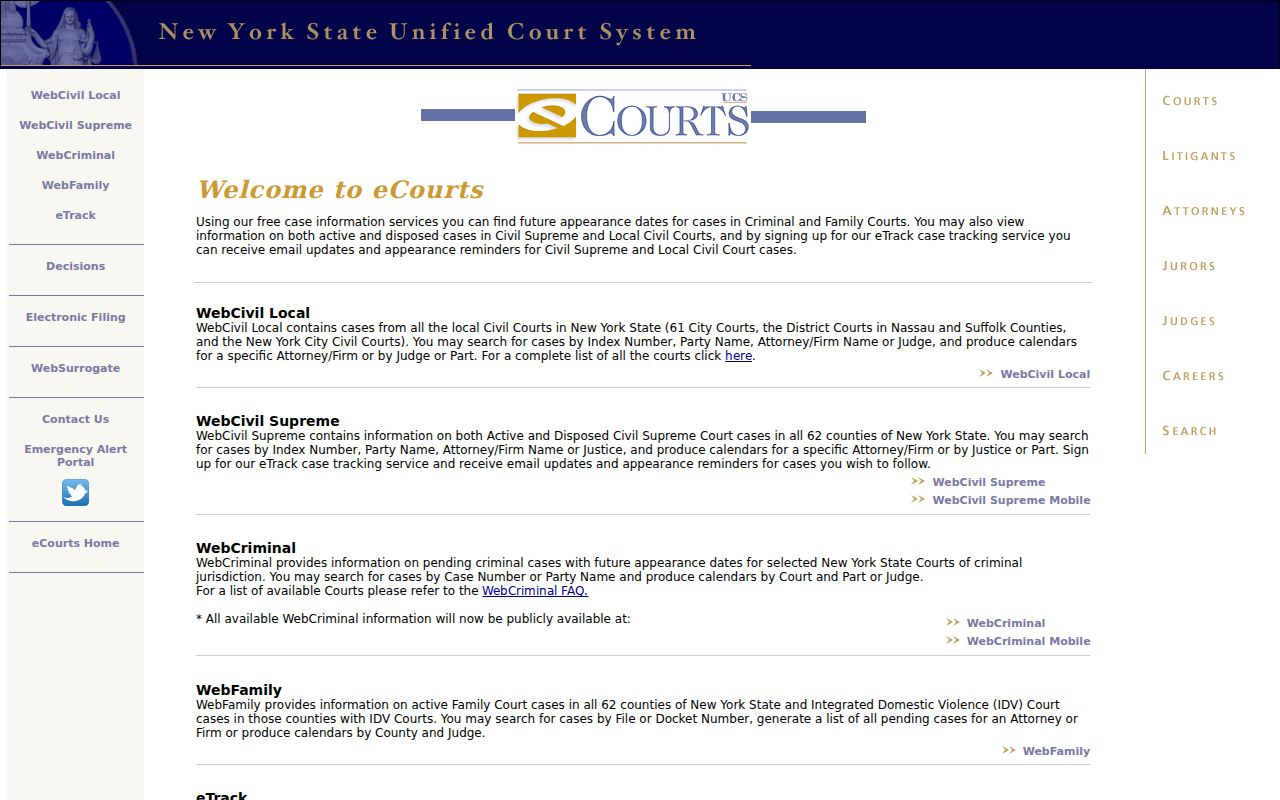
A name search sometimes ends at a court index or a vital-record request. Those doors open less wide than a parcel record. NYS eCourts offers several index tools under one roof. WebCivil Supreme includes Index, Party, Attorney or Firm, Justice, calendar, and Document Search tabs. WebCriminal handles case-number, summons, defendant-name, corporation, and calendar paths. A caption proves very little. It establishes neither guilt, current residence, nor a complete case history. Status, disposition, court, and access restriction all shape what a result means.
Treat the eCourts public search entry point as a starting screen rather than a promise that every paper is online. The County Clerk permits follow-up on public civil files. Sealed, confidential, and matrimonial records face different limits.
Relationship research runs through the County Office of Vital Statistics. It manages local certified and genealogy routes. County rules allow certain older death and birth genealogy copies, subject to age, death, relationship, proof, fee, and processing limits. Think of the office as a custodian. It is not an open modern name index. The County Vital Records page documents local online, mail, and in-person options where eligibility permits.
Genealogical evidence works best as a chain. An index flags a likely event, a custodian issues the right record, and directories, probate, obituary, or land material supplies the dated context around it.
Onondaga County Records Change Over Time
Onondaga County pairs very old paper trails with newer web systems. The Clerk's 2024 annual report counted 275,003 land-record pages entered into the digital records database. The county capital plan describes work to digitize remaining mortgages from 1794-1950 along with numerical deed and mortgage indexes from 1799-1986. A project description is useful context. It does not prove every historical image is already searchable online.
Digital access has practical limits of its own. GIS layers can appear only at a useful zoom. Voter lookup relies on cookies and JavaScript. The state registry search adds its own verification step. The DOS license result is active-only, and eCourts can report delays. Record both the access date and the portal's own update notice. An online finding in Onondaga County is often most reliable when paired with an office, library, archive, or written request route. Consider a library, archive, or written request route.
Note: Portal behavior and collection access can change, so recheck a link, fee, and service notice before submitting a request or planning a visit.
Historical Onondaga County Resident Directories
Historical directories form the deepest shelf in the Onondaga County residents directory. The County Clerk Archives holds Syracuse directories from 1861 to the present. It also keeps census material from 1850-1925, naturalization material, maps, and other archival records. The Onondaga County Public Library Local History and Genealogy collection goes further back. It keeps Syracuse and suburban directories in print from 1936 forward. Microfilm covers 1862-1935, and fiche reaches back to 1844-1862. Telephone directories, newspapers, cemetery cards, WPA files, and selected Sanborn maps round out the holdings.
Every directory entry is a dated publisher report. It is not proof of a current household. Capture the title, year, page, entry, and repository call number. Then compare neighboring years alongside a census or deed record. The Onondaga County city directory collection guide treats the historical volumes in fuller depth. It also covers reading methods.
Onondaga County Archive Access Routes
When an online result stops, physical collections add needed context. OCPL Local History and Genealogy sits at 447 South Salina Street on the third floor. It publishes its reference hours, card rules, and query guidelines. Give the staff name variants, dates, street or municipality, occupation, and the exact question. They can search city directories and related materials. The County Clerk Archives offers another route. It covers directories, census, maps, and earlier material on Photostat or microfilm.
The Onondaga Historical Association's Wright Research Center holds family files, maps, photographs, and location files. Its access is time-sensitive. A building project has affected remote services and in-person appointments. Check the current research-center notice before you plan a visit. Physical research means recording the collection, reel, volume, page, original wording, and image permissions. Simply copying a result screen is not enough.
Onondaga County Request Fallbacks
Portals run out. When an online lookup stalls, the Onondaga County custodian's documented access route usually still works. The County Clerk welcomes in-person research. The office keeps separate contacts for real property, civil actions, criminal actions, archival or Photostat work, judgments, and UCC filings. Vital records offer walk-in, mail, online, and genealogy channels. Each channel carries its own eligibility rules. OCPL answers focused genealogy queries when the request lists name variants, dates, a street or municipality, and the exact research question.
New York's Freedom of Information Law reaches existing records. It cannot force an agency to build a new list or answer an open-ended question. A solid Onondaga County FOIL request names the record type, the date range, and the municipality. It also names the agency. Include the parcel or SBL when known. Say which electronic format you prefer. Agencies must grant, deny, or acknowledge a request within five business days. An acknowledgment should state an approximate fulfillment date. Syracuse maintains a separate FOIL contact for city-held material, including records that county offices do not manage.
Copies carry set fees. The County Clerk's August 2024 fee schedule lists regular copies at $0.65 a page. Personal copies run $0.25 a page. Certified copies cost $5 for the first four pages plus $1.25 per page after that. Fees can change, so confirm them before paying. For an older household, a library visit may beat a county request. OHA's 2026 building project limits access, so in-person appointments replace routine remote research.
Note: Ask for the existing record that answers a defined question, then preserve the custodian, record date, and any access limit with the result.
Onondaga County Safety and Fraud Records
Public access has a safety boundary. The New York Address Confidentiality Program can supply eligible participants a substitute mailing address. Confidential voter registration is separate protection. Court records can be sealed or redacted. Vital copies carry eligibility restrictions, so never combine lawful fragments from different systems to expose a protected location or turn public records into a personal dossier.
The County PropertyCheck announcement describes an alert service that notifies owners when official documents are recorded in their name.
PropertyCheck protects owners. It is a notification service, not an owner-search substitute. It also makes no allegation of fraud, and Syracuse separately warns of permit and land-use renewal scams, so rely on known county or city contacts rather than unsolicited payment links.